 Image 1 of 1
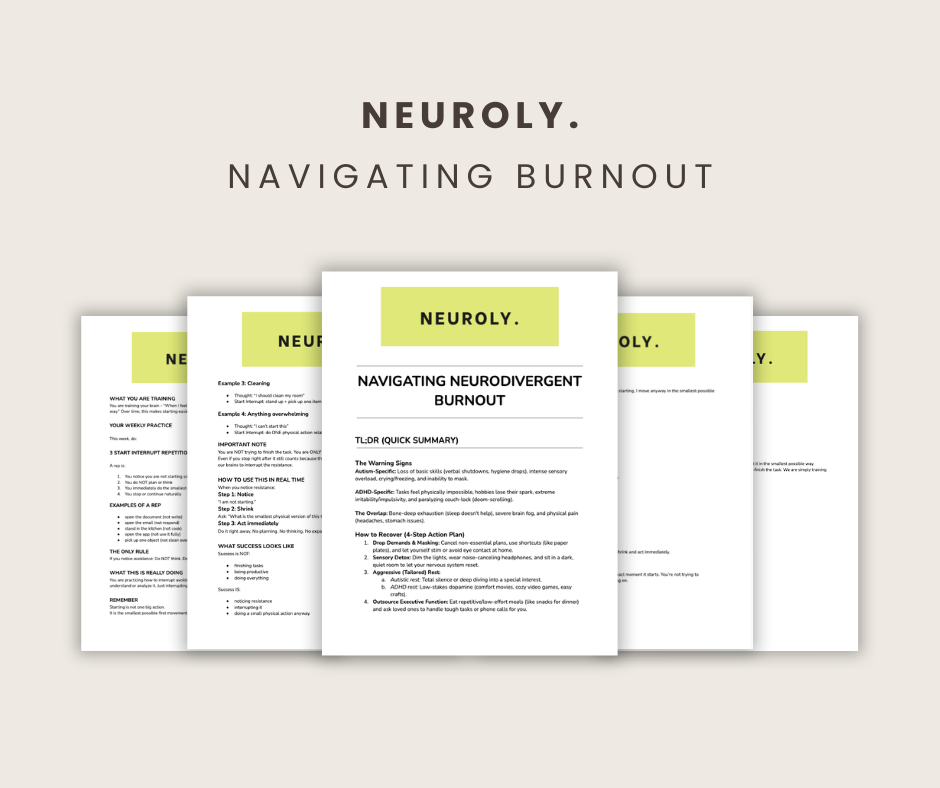
4 Tips for Recovering from Burnout
Burnout can come fast and furious and we often don’t recognize it until we are already in the middle of it.
When you hit this threshold, you cannot simply push through at your current pace. Recovery requires an aggressive, radical reduction of demands on your nervous system.
_______________________
Disclaimer: The information provided in this resource is for educational and informational purposes only and is based on lived experience and community research. NEUROLY. and its creators are not doctors, therapists, or licensed mental health professionals. This guide is not intended to be a substitute for professional medical advice, diagnosis, or treatment. Always seek the advice of your physician or other qualified health provider with any questions you may have regarding a medical condition or mental health concerns. Never disregard professional medical advice or delay in seeking it because of something you have read in this resource. Reliance on any information provided in this guide is solely at your own risk.
Support Resources: While this guide is a starting point for self-understanding, processing a new diagnosis can be overwhelming. If you find yourself in a mental health crisis or need immediate support, please reach out to a professional service.
Crisis Text Line: Text HOME to 741741 (US/Canada), 85258 (UK), or 50808 (Ireland).
988 Suicide & Crisis Lifeline: Call or text 988 (US/Canada).
International Resources: Visit findahelpline.com to find support services available in your specific country.
4 Tips for Recovering from Burnout
Burnout can come fast and furious and we often don’t recognize it until we are already in the middle of it.
When you hit this threshold, you cannot simply push through at your current pace. Recovery requires an aggressive, radical reduction of demands on your nervous system.
_______________________
Disclaimer: The information provided in this resource is for educational and informational purposes only and is based on lived experience and community research. NEUROLY. and its creators are not doctors, therapists, or licensed mental health professionals. This guide is not intended to be a substitute for professional medical advice, diagnosis, or treatment. Always seek the advice of your physician or other qualified health provider with any questions you may have regarding a medical condition or mental health concerns. Never disregard professional medical advice or delay in seeking it because of something you have read in this resource. Reliance on any information provided in this guide is solely at your own risk.
Support Resources: While this guide is a starting point for self-understanding, processing a new diagnosis can be overwhelming. If you find yourself in a mental health crisis or need immediate support, please reach out to a professional service.
Crisis Text Line: Text HOME to 741741 (US/Canada), 85258 (UK), or 50808 (Ireland).
988 Suicide & Crisis Lifeline: Call or text 988 (US/Canada).
International Resources: Visit findahelpline.com to find support services available in your specific country.